
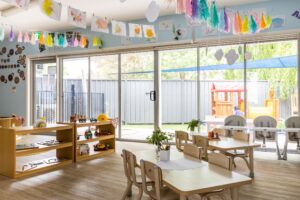
The Environment as the Third Teacher
In early childhood education, you may hear the phrase “the environment is the third teacher.” While it might sound unfamiliar at first, the idea is simple — children learn not only from educators and families, but also from the spaces around them.
At Tillys Play & Development Centres, we thoughtfully design our environments to support children’s learning, curiosity and development every day.
Where Does This Idea Come From?
The concept of the environment as the third teacher is strongly linked to the Reggio Emilia approach, developed by Loris Malaguzzi. This philosophy recognises three key influences on a child’s learning:
- The child
- The educator
- The environment
The environment is seen as a powerful tool that can inspire exploration, creativity and independent thinking.
Why the Environment Matters
Children are naturally curious. The spaces they spend time in can either encourage or limit that curiosity.
A well-designed environment can:
- Invite children to explore and investigate
- Support independence and decision-making
- Encourage creativity and imagination
- Promote calmness, focus and wellbeing
- Foster a sense of belonging and security
When environments are intentional, they become active participants in children’s learning.
What Does “The Third Teacher” Look Like?
The environment can support learning in many different ways. Some key elements include:
Natural and inviting spaces
Using natural materials, soft colours and open spaces helps create a calm and welcoming atmosphere.
Accessible resources
When children can easily access materials, they are empowered to make choices and lead their own learning.
Open-ended materials
Items such as blocks, loose parts and natural objects encourage creativity and problem-solving.
Thoughtful room design
Defined spaces for different types of play (quiet, active, creative) help children understand how to use the environment.
Outdoor environments
Nature-based play spaces support exploration, physical development and connection to the natural world.
How Tillys Uses the Environment as the Third Teacher
At Tillys, our environments are carefully planned and continually evolving to meet the needs and interests of the children in our care.
Our educators:
- Set up engaging, purposeful learning spaces
- Rotate and adapt resources based on children’s interests
- Create calm, home-like environments that feel safe and welcoming
- Provide opportunities for both independent and collaborative play
- Use natural and open-ended materials to extend learning
- Design outdoor spaces that encourage exploration and physical activity
The environment is always changing alongside the children, supporting their growth and development.
How Families Can Create Learning Environments at Home
You don’t need a classroom to create a supportive learning environment — simple changes at home can make a big difference.
Families can:
- Create small, organised play spaces
- Offer open-ended materials like blocks, drawing supplies or nature items
- Keep toys accessible so children can choose independently
- Use calm, inviting spaces for reading or quiet play
- Encourage outdoor exploration and connection with nature
Even small adjustments can support independence, creativity and confidence.
Supporting Learning Through Space
When we view the environment as a teacher, we begin to see how powerful it can be in shaping children’s experiences. Thoughtfully designed spaces help children feel confident, curious and capable.
At Tillys, we are proud to create environments that inspire learning, nurture wellbeing and support every child’s unique journey.
Because sometimes, the space around us teaches just as much as the people within it. 🌿💛